
Beyond the “Data Moat”: Why AI Is Rewriting Financial Software

The phrase “AI-native” has rapidly become one of the most overused terms in technology.
Nearly every software company now claims to be an AI company in some capacity. Yet in practice, many of these platforms are still fundamentally operating under the same assumptions that defined SaaS over the last decade: static systems of record, fragmented workflows, bloated engineering structures, and point solutions built around narrow features rather than complete operational ecosystems.
1. The New Moat: From Point Solutions to Comprehensive Suites
At the center of that thesis is a simple idea: Traditional software defensibility is weakening faster than most incumbents realize.
For years, software companies operated under the assumption that owning a niche workflow or proprietary dataset created a durable moat. That may have been true when building software required large engineering teams, long development cycles, and substantial technical overhead. That environment is changing rapidly.
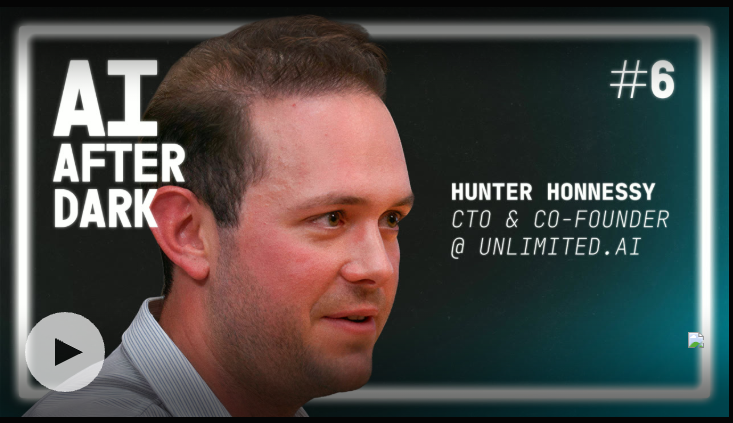
Modern development tooling and large language models have dramatically compressed the time required to build functional software systems. In many cases, highly capable engineers can now replicate large portions of traditional SaaS functionality in days rather than quarters. As Honnessy notes during the interview, many single-point solutions increasingly resemble features rather than businesses. This shift has major implications for fintech.
Historically, wealth management and private markets infrastructure evolved as a collection of disconnected systems. One platform manages reporting. Another stores documents. Another handles analytics. Another handles CRM workflows. Another handles communication. Most systems were designed primarily as databases with user interfaces layered on top rather than systems capable of understanding relationships between the information inside them.
Honnessy argues that the future moat is no longer simply “data ownership.” Increasingly, defensibility lives in the intelligence layer itself: the contextual understanding built on top of operational data, workflows, user behavior, documents, transactions, and relationships across an organization. In other words, the value is shifting from storing information to understanding it.
That philosophy has heavily influenced the architecture and long-term direction of Unlimited.ai. Rather than approaching the market as another reporting platform or portfolio dashboard, the company views the future private markets operating system as an integrated intelligence layer spanning the entire investment lifecycle. This shift is also beginning to fundamentally change engineering organizations themselves.
2. The Rise of the "Forward Deployed Engineer"
One of the more key concepts that Unlimited.ai focuses on, is what Honnessy describes as the collapse of the traditional “telephone game” inside software companies. Historically, information moved slowly between clients, business analysts, project managers, engineering teams, QA departments, and release cycles. The process often introduced latency, miscommunication, and organizational drag at nearly every step. AI significantly compresses the distance between idea and implementation.
As a result, Honnessy believes the next generation of highly effective engineering teams will likely look very different from traditional enterprise software organizations. Rather than large siloed departments, he believes smaller teams of highly technical “Forward Deployed Engineers” will increasingly dominate. These engineers are capable not only of writing software, but also of interacting directly with clients, understanding operational pain points in real time, and implementing changes almost immediately. In this model, the distinction between engineer, product strategist, and operator begins to blur.
The result is not simply faster development. It is tighter feedback loops between users, workflows, and infrastructure. That operational philosophy also extends into product design itself.
3. Solving for "Pain" Rather than "Features"
According to Honnessy, one of the biggest mistakes software companies make is focusing too heavily on feature requests rather than underlying operational pain. Users often describe the symptoms of inefficiency without fully understanding the structural cause underneath them. In private markets specifically, many organizations are still operating on workflows heavily dependent on spreadsheets, fragmented portals, PDFs, manual reconciliation processes, and legacy reporting systems built years ago. The opportunity is not simply to add AI features onto existing workflows, rather it is to eliminate operational friction entirely.
This distinction matters because many AI companies today are optimizing for novelty rather than necessity. Honnessy argues that long-term winners in financial technology will not be determined by which companies produce the flashiest demos or the most impressive chatbot interactions. They will be determined by which systems become operationally indispensable to the organizations using them.
4. 2026: The Year of the Agent
Looking forward, Honnessy believes the next major shift will occur through increasingly agentic systems capable of orchestrating workflows autonomously across software environments, rather than functioning as passive interfaces. Future AI systems will likely call tools dynamically, coordinate with other systems, manage operational tasks, and reduce substantial portions of the administrative burden currently embedded within financial organizations. Ultimately, however, the broader goal extends beyond AI itself.
The Verdict: Finance Doesn't Have to Suck
At its core, the mission is simpler: financial technology does not need to remain synonymous with fragmented workflows, operational drag, and software that feels decades behind modern consumer experiences.
For too long, the finance industry has accepted complexity, inefficiency, and spreadsheet dependency as unavoidable characteristics of serious financial work. Unlimited.ai believes that assumption is increasingly becoming obsolete. The next generation of financial infrastructure will not simply store information – it will understand it.